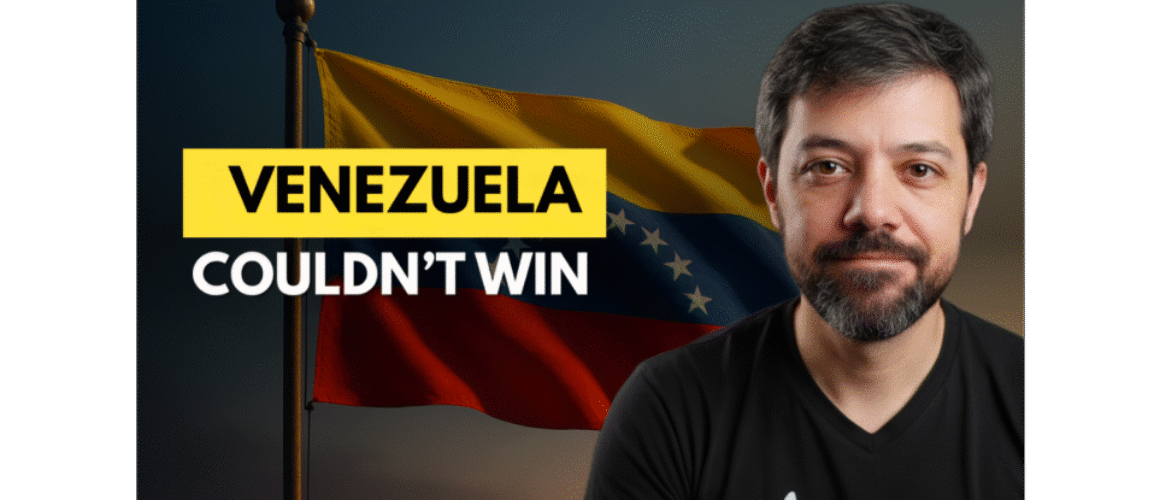


In this rare and deeply personal episode, Rob steps away from the traditional gamification conversation to speak as a Venezuelan. Blending lived experience, political involvement, and game-thinking principles, Rob reflects on the cost of doing everything “by the rules,” the exhaustion of democratic paths, and why this moment matters so deeply to millions of Venezuelans around the world.
Rob Alvarez is Head of Engagement Strategy, Europe at The Octalysis Group (TOG), a leading gamification and behavioral design consultancy. A globally recognized gamification strategist and TEDx speaker, he founded and hosts Professor Game, the #1 gamification podcast, and has interviewed hundreds of global experts. He designs evidence-based engagement systems that drive motivation, loyalty, and results, and teaches LEGO® SERIOUS PLAY® and gamification at top institutions including IE Business School, EFMD, and EBS University across Europe, the Americas, and Asia.
Looking forward to reading or hearing from you,
Professor Game Team
Full episode transcription (AI Generated)
Rob Alvarez (00:04)
spent a lot of time thinking about how to start this video and no meaningful conclusion arrived. I thought about thousands of things I could discuss. I know I could speak hours on end about this, this topic about why what happened in Venezuela is ⁓ so meaningful for so many of us, so many Venezuelans.
So I’ve had the hardest time just thinking about how to get started. ⁓ so I’m just going to start a small rant here. As you know, this podcast is dedicated to gamification, game thinking, motivation, behavioral science, which I am extremely passionate about, think, I actively think can and is changing the world in many meaningful ways.
Yet I’m also from Venezuela. This is one of the last t shirts I bought before I left over 12 years ago.
And this, this has a lot of, can analyze it from the core drives, you know, all the, all the motivations it has for me and how important, how meaningful these changes are, but I’m a foreigner.
in right now, I don’t live in Venezuela, I live in another country. And honestly, I think, you know, I believe very much in people, you know, sort of living wherever in the world they see fit and being happy wherever they can. And, you know, frontiers being relatively open so that people can do that, you know, without without the bad things that, you know, Venezuela has been a terrible example of how how to export.
criminals, because that’s one of the things that government did. But beyond that, I’ve seen I live in Spain and Madrid, I’ve seen a lot of the public discourse here about what happened. I’ve witnessed how, you know, there’s been shows of massive happiness. You know, you can call them sort of protests, instead of protesting, people are just showing how happy we are as Venezuelans that that Maduro is no longer.
in power. I’m not going to get too much into it. You know, what’s what’s the situation right now? How how is that good or bad? How you know, what’s the transition? What do I think a transition should look like? I just I just want to spend a little bit of time
sending a message because I understand that this is a platform and there’s people listening, people who have never heard of Venezuela or they only heard it from the outside know very little about it. And I’ve been seeing all sorts of things on the internet from outward, honestly, ridiculous stuff, all the way to more sensible people trying to really figure out what’s going on.
How do we Venezuelans feel about the situation in our country and what’s happened? And even some people saying apparently horrible things, a fellow Venezuelan saying like, oh, you have no opinion on this because you have no idea. I think everybody’s entitled to an opinion. That’s the first thing. And that’s one of the things we lost in Venezuela with the previous government. I’m not sure how this government will behave around that, hopefully at least a little bit better.
the coming years just getting better and better. That’s one of the things we lost. So I feel strongly about people being entitled to an opinion. yet having an opinion doesn’t mean that you are more right, that you know more about the situation than we do. So that’s the first thing, right? Like everybody can have an opinion. It doesn’t mean that you’re right, that you understand the full scope of that. And then like my background, I don’t talk about this on the podcast very often about the other things I’ve done.
in sort of like past life. ⁓ was heavily involved in politics for maybe eight years of my life. Some of the best eight years of some people’s people’s lives, you would argue. I started when I was around 20, maybe earlier, maybe 18. I started being involved, you know, not super strong, and then it got heavier and heavier until it became a full-time job, full-time lifestyle in many ways. ⁓
And I stopped doing it not because I stopped believing in the importance of change, but I still had that strong core drive one epic meaning and calling. But because I didn’t, didn’t, the core drive two was not, was not advancing in any way. There were no achievements. My, my involvement, my sacrifices were not being meaningful anymore. That that’s the only reason I really stopped doing what I was doing. I was willing for the sacrifice. did a lot of sacrifice for that.
And I just bring that up because I want people to understand that even though, and part of that background being in politics also involves I was a model UN freak as well. So I understand at the level that a student can understand it, but that is a lot deeper than I would say a lot of people in the similar situation.
I also went to Model UN, so I understood a lot about international systems. And when getting into politics, part of the things that I was interested in were precisely how geopolitics happen and all that. So I do understand that the way this was conducted.
can be scary and can be harsh for many other countries. ⁓ That situation of, you know, this president was deposed by a foreign authority, essentially the acting president, I guess he was not our president. He was illegitimate. He was not elected. In fact, he was, he lost an election to another candidate who was, who had to escape Venezuela. So
I understand that the consequences of that are not ideal. Like the way people are saying like, yeah, but now the American government has implied that they can do whatever they want. I understand that argument. I’m in fact, I would, to a certain extent, I would back it up. Problem is, and here’s where, you know, reality kicks in is
In Venezuela, Venezuelans, especially the ones who are still there, because I was a strong, heavy part of that fight for a very long while. ⁓ fact, until the day I left, I was very, very heavily involved, very invested personally. But we’ve tried everything. Venezuelans have tried everything, every, every thing in the rule book. We did election, like the cusp of that was, would happened last year.
We won the elections and we had proof that we won the election and the guy who said he he had won the elections did not have any proof whatsoever that he was the one who won elections yet He swore he would be the president for the next whatever in front of an assembly of congress that Was also illegitimately chosen ⁓ That supports him or whatever
And the, the criminal justice system that has been completely kidnapped for a couple of decades and the military branch, it’s like a long, et cetera. Those are the people that, that supported him and not even the people, the institutions that have already been kidnapped long before even Maduro was in power. That was, came before with Chavez as well. He just deepened the wound to our democratic system. So what I’m saying is we.
We played the game, fully the democratic game, the legal game, internal resistance. was part of the generation of students who started with the student movement back in 2007, I believe 2008. We won elections against Chavez stopped one of the reforms. He was trying to change the constitution. And then he just ignored that and made another crazy election and changed it anyways. ⁓
So we tried everything and without somebody bigger bully in a way to stop that crazy government from continuing to oppress people. in very clear and obvious.
sign of that is, know, as, I’m recording this, think it was last night here in Spain that we got the news that a bunch of political prisoners were just finally set free. Those political prisoners that should have never been in jail for the first, in the first place, but you know, everybody’s happy that they’re not in jail anymore.
all of these violations of constitutions, international right, et cetera, et cetera. How do you operationalize? Well, you know, it’s an internal matter, so Venezuelans have to resolve it themselves. How do you, how do you operationalize that? It sounds beautiful. International relations again, model UN. I understand that.
Not respecting that principle is like, yeah, you what’s next? Am I next? And that’s what part of the presidents in other countries and politicians are thinking like, whoa, okay. So they, so they, did that. Am I next? ⁓ who’s there to judge and consider if that was legitimate or not. And that that’s the fundamental issue when people are discussing that. I, I, and I get it again. The problem is operationally in reality, what were we left to do?
Is the international system just supposed to abandon countries that have done everything to change their situation? They have the will. The origin of power is supposed to be the people in a country where supposedly elections choose governments. not even like, no, the system is not that way. It just doesn’t work that way. And that’s how this country operates. None of those countries never operated under anything that’s different. Allegedly to elections, the person that gets elected gets into power, does the reforms, does whatever policies. So what were we supposed to do?
And is it sovereign for, yeah, the president said that cannot be done, but we, the people who have the power, we said, yes, anybody come please help us. We need to get rid of this person and the power structure that is holding them because we cannot do it ourselves. So was it really somebody else externally just doing that and taking them out of power? I don’t, I don’t think so. I don’t think so. And it’s something we were requesting. need it. We were desperately needing something like this.
that it’s going to have consequences. I am not naive in that sense at all. I know, you know, this was funded with American taxpayers, right? They’re funding this operation. Who else is paying for it? Americans, right? So I, I’m deeply thankful for that, that help. I don’t think it’s going to be, you know, sort of a free, free, free lunch. There’s no, no such thing as free lunch, right? ⁓ I understand that has consequences. There’s, there’s, you know, we’re going to get charged for that service.
so to speak, are we willing to pay for that service? Absolutely. I haven’t met a single Venezuelan, especially now that I’m outside, but you know, I have a lot of friends as well still in Venezuela who was not willing to pay for that price. And what many people are not realizing, say, yeah, they’re going to take your oil. You think our oil was still ours, that we could use our oil as we decided, or was it actually taken
by foreign powers, not Venezuelan, foreign powers, just to name a few, Cuba was living out of Venezuelan oil, actually getting the oil and selling it for the money, keeping some of it for internal use and selling part of it to keep their economy afloat. And don’t get me wrong, I understand Cuba needs all of this, but don’t Venezuelans also have a right to that? And there’s a long list of this, right? So are we willing to give up all that oil that was being sent to foreign?
powers being taken away from us now send it to the US twice as much as that because among other things, the oil industry was completely destroyed from, you know, it’s producing like 10 % of what it could be even 20, just 20 % of what it was producing before these people came into power 26 years ago. So we can still give twice as much as that if there’s investment and we produce more. I’d be happy for that to go to whomever provided the service and pay
You know, 10 times over what that operation costs or whatever amount of times, because there’s also risks and, you know, constituents and all that. I’m happy to pay for that. Happy, happy. didn’t, I never, I never left my country because I didn’t want to be there.
I left my country because I was left with very, very few good alternatives. I’m delighted. I’m happy. I’m excited about being here in Spain. We’ve built beautiful things here in for our family, for our future in Madrid. Significant part of, you know, my immediate and close family is here. We, you know, we’ve enjoyed our time here. We’re very thankful for, you know, Spanish people to received us. have European passports as well, nationalities. So we’re here.
like that legal basis, but it’s not because I didn’t want to be in Caracas. I still think it’s the perfect climate. Like there’s so many perfect things about being there except for how the whole game is set up and how the whole system works. So.
I don’t know if, if, if you’re still having your doubts about whether this was a good or a bad thing before going on social media and sending your rants, not saying not to do it. You’re entitled to your opinion. Of course. Um, as I said before, everybody can have an opinion. I it again, I still don’t think all opinions are valid, true or anything just because they’re your opinion. It doesn’t mean that’s true or that you can just trump my opinion either. Um, but before going on those rants, how about you?
And I’m sure you can just walk around and find a Venezuelan. I’m sure you know Venezuelans if you’re not in Venezuela. There’s we’re all over the world at this point. I’m asking what does this mean for you? ⁓ How do you feel about that? Beyond the consequences that I see before I tell them to you, what do you see? How does the future look for you? Is it brighter? What are the risks that you see? Are you, are you scared as well? Try to understand a bit more about the situation before just diving.
straight into ⁓
to your internal political thoughts. And let me give you an example here of a completely different situation. Same government, same president mentioned something and has been talking about Greenland for a while. And I saw this Spanish politician.
not by just by chance, ⁓ relatively far left wing ⁓ discussing, you know, of course, saying that that’s not acceptable and so on and so forth. And the the journalist was insisting like, yeah, but, know, what do we do? And this person was a multilateralism and collective security, because this person is advocating strongly against Europe having, you know, more investment or spend on military.
The journalists were just pinching him to say that and say exactly how does that transform into a strategy? Because they were also mentioning like, yeah, multilateralism, all that. What are you doing in Ukraine and Russia? know, Russia started invading Ukraine. So, well, I don’t want to get into that. Again, it’s not a situation I can, I’ve lived or anything, so I don’t want to get into that. But what he was pinching him in that direction was like, okay, but what does that mean? What if…
The U S who already has boots on the ground because there’s a military base of the U S there says, you know what? We have a military country, man. You know, this country is ours now. What is a response that you have to that? Because for a military aggression, how do you respond with that self, self-defense, collective defense or something like that? He was saying, and multilateral, what does that mean in concrete terms? If tomorrow that happens or if
Or if you know that’s going to happen in 10 years, what does preparing in terms of collective security mean? Do you, do you prepare more? And he was like, yeah, you know, in the end, the U S is always going to have more military power and so on and so forth. Well, yeah, but then what do you do? submit.
And that’s exactly the point that I’m saying. Like there is in Venezuela, what do you do? All these beautiful words and all these concepts are in the sky of saying, yeah, multilateralism and all that. But that in 26 years, 26 years, nothing has happened. And you can even narrow that period down to five years, 10 years. Maduro has been in power for over a decade to put that in perspective. And
many countries in the world that recognized Guaido, who was the president of the National Assembly because there were no legitimate elections. This guy continued in power after that. Then he did actually make more elections. And the people in Venezuela even went to vote, even after all that had happened, went to vote massively against that government, against the and in favor of the alternative. The alternative won those elections. How do you translate that power of the people into
the power of the people becoming part of the government. There is no practical way. dialogue and negotiation, dialogue and negotiation have been on the table with this government for a decade. And they’ve been eluding doing absolutely anything about it by sitting in more and more and more tables. Norway got sick of that and stopped saying that they were going to provide, you know, facilitation for the
peace process or whatever. A bunch of people start saying that and their allies in the region, when they lost the elections, they just shut up. But now that the U.S. deposed the president, I guess amongst other things, they’re scared that they might get the same treatment. And that’s when they speak up. Why didn’t they speak up when being the so-called democratic government, they saw their neighbor and ally stealing elections and doing nothing about it? How do you as a Venezuelan operationalize that?
And I’m sorry, this is a bit more of a somber episode than you might be used to, but I’m, I’m Venezuelan. I identify fully as a Venezuelan always have. And I just can’t let this situation just go because, you know, it’s not appropriate or whatever. This is a platform that is not meant for any political.
Statements or similar and this is yeah, of course everything when you talk about these things. It’s always political in a way I’m just getting into this because Being a Venezuelan I do feel that I have a certain level of responsibility to also help My fellow countrymen my country Provide the message of what’s actually going on there and and why? the current situation for us is
hundreds of times better than it was. And a very clear example is what I mentioned. All those political prisoners, some of them had been there in jail unfairly. Those were at least three of them that I know of for two decades. Two decades. Those people had spent quite a few years after the tribunal said, you fulfilled your time in jail. was whatever, 15 years. They spent those 15 years in jail. Tribunal said,
These people should get out of jail because they fulfilled their time. They were still in jail among, you know, others, like people who were literally caught caught in their WhatsApp. said, Maduro should get out of the government or I hate you, Maduro. Policemen went through their phones, saw that and said, you go to prison. Those are people who were, and some of them probably still are in prison. So
situation is much better for them. For sure. For many of us who at least have hope now that there is going to be change. And you can argue, know, that the elected president has not been put in power yet. You can always say yet, right? Yet is always looks into the future. Maria Corina Machado, who was one of the internal elections of the opposition.
not been considered as much as some would have expected. I agree with that. understand all of that. Still is having Maduro being in a tribunal in the U S being judged for at least some of his crimes better than having him in power, oppressing the people even further? Yes. Is, are the people are the people who are in power now feeling the pressure of
we might be next. So we might better at least behave differently than we were behaving before. And definitely, you know, 99.9 % of the options are a lot better than what they were doing before. So is that better? Yes, it is better. Can things go downhill? Well, you know, it’s pretty much the end of the valley at this point for Venezuela. So almost anything is uphill at this point. So
I am happy. I am super happy for what happened in Venezuela. This was a bit somber because I did want to make sure that people understand all the crazy amount of stuff that many of us or all of us in many ways have been through. Biggest, one of the biggest migrations of history is the one from, people who like me have left, left our country. left well before it become became so massive, but, ⁓ yeah, I just wanted to give you.
a little bit more of perspective on that and, and share, you know, there’s, there’s a huge core drive one in me. There’s a huge Epic meaning and calling for me on this. There’s, you know, core drive five, you know, my fellow countrymen and people, I part of me were like extremely happy about what happened and collectively feeling that joy of the good things that happened. There’s a huge road ahead, many things still to be, to be done, et cetera, et cetera. But at least, at least the beginning of the path has finally been clear.
So I’m not gonna end the podcast as I usually do because this is a very, very different episode, but thanks for listening. Thanks for hanging on for what? Like 20 minutes I’ve been talking about this. Thanks for just being here and listening.
Talk soon.