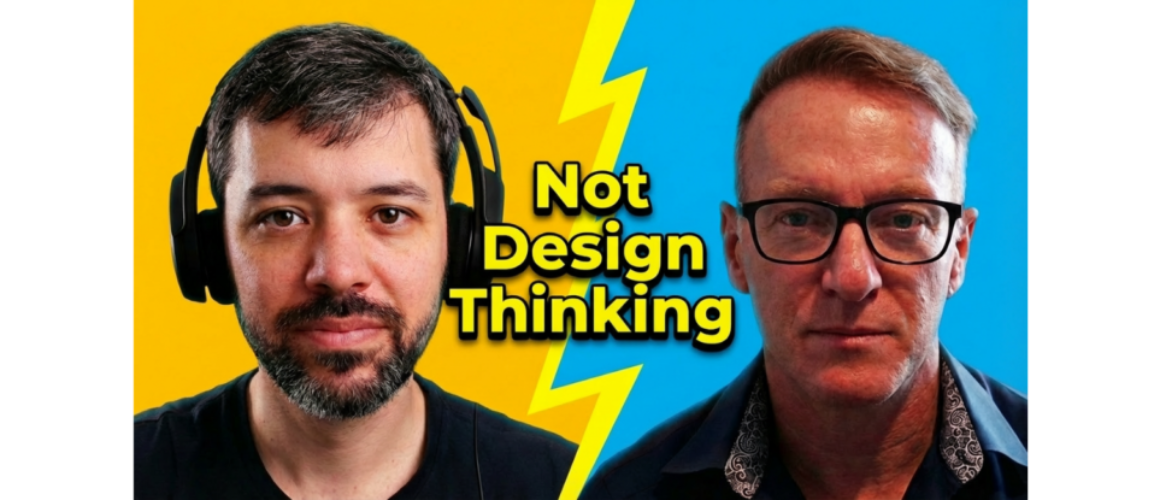

Joris Beerda tested Human-Focused Design vs Design Thinking (Which actually works?) | Episode 438


 Wondering if Octalysis fits your challenge? Quick intro chat → professorgame.com/chat
Episode Summary
Joris Beerda, CEO and co-founder of The Octalysis Group, walks through the five-step Octalysis design process and argues that IDEO-style human-centered design produces intuitive but not repeatedly engaging products. He distinguishes human-centered from human-focused design, details the “biggest bang for the buck” feature scoring method that weights motivational power against implementation ease, and shares case work from Porsche/Volkswagen, DBS Bank Singapore, Takeda, and the P&G distributor Navvo Arbico. Including a Takeda plasma donation project that collapsed when the client nearly went bankrupt.
About the Host
Rob Alvarez is Head of Engagement Strategy, Europe at The Octalysis Group (TOG), a leading gamification and behavioral design consultancy. A globally recognized gamification strategist and TEDx speaker, he founded and hosts Professor Game, the #1 gamification podcast, and has interviewed hundreds of global experts. He designs evidence-based engagement systems that drive motivation, loyalty, and results, and teaches LEGO® SERIOUS PLAY® and gamification at top institutions including IE Business School, EFMD, and EBS University across Europe, the Americas, and Asia.
Key Takeaways
- Human-centered design produces inclusive and intuitive experiences but does not reliably produce products users return to repeatedly, that requires human-focused design.
- Optimizing a single canvas for 20 business metrics is impossible; designs must prioritize one top metric with four or five secondary ones, because optimizing for daily active users produces a different layout than optimizing for revenue per user.
- Features should be scored on a power-versus-ease matrix so that high-impact, feasible features make the MVP and Ferrari-tier giveaways are filtered out before development starts.
- A flat, remote, meritocratic structure where roughly 40% of revenue goes to the people doing the work is what allows TOG to retain senior consultants across continents.
Topics Covered
- [03:29] Running a global consultancy around the clock
- [08:24] Building a diverse client pipeline
- [13:00] Reimagining cars as daily mobile platforms
- [17:50] The Octalysis five-step design process
- [28:33] Recommending Daniel Kahneman as a guest
- [33:59] Joris’s superpower: feeling the user experience
- [39:29] Where to find Octalysis Group case studies
About Joris Beerda
Joris Beerda is the Co-Founder and CEO of The Octalysis Group. As a world-leading expert in Human-Focused Design and Octalysis Gamification, Joris’ global career in creating engagement spans across 20 years, 15 countries and 7 languages. He has designed Human-Focused experiences for dozens of Fortune 500s as well as medium-sized companies. Joris is also a well known Keynote Speaker on Gamification in many renowned conferences throughout Europe, Asia, and Australia.Find the Guest Online
Mentioned in This Episode
Some links below are affiliate links. As an Amazon Associate, I earn from qualifying purchases.
- Proposed guest: Daniel Kahneman or Richard Thaler
- Recommended book: Why Everyone Else is a Hypocrite by Robert Kurzban
- Favorite game: Heroes of the Storm
Free Resources and Get in Touch
- Core Drives in the Wild: Professor Game Free Guide
- Get Daily Value on Your Email
- Let’s chat about your gamification project
- YouTube
- Start Your Community on Skool for Free
- Ask a question
[03:29] Running a global consultancy around the clock
Joris Beerda (03:29) Being a CEO, I’m responsible for a number of things. So you’re constantly, you know, all over the place. And because you have teams in Latin America, North America, Europe, as well as Asia, you’re basically operational around the clock. You have no real choice. Also because our clients are also distributed globally. And so, you know, most of our clients, still the majority probably in the United States. But as you know, you know, you’re busy with that project itself. We have a big client in Mexico. We have clients in Georgia, we clients in Kazakhstan, we have clients in Singapore. So it’s a non-stop operation. So my week basically consists of very long days, mainly sometimes till 12, 1 o’clock, sometimes later in the morning. ⁓ And then I hopefully, know, if I’m lucky, I can turn the dial down on Friday and do more in-depth work, you know, on Friday. And also my Sunday evening normally is about in-depth work. And for the rest is just trying to make things work and making sure that we keep our clients happy and making sure that the people working at TOG, the Dallas group are satisfied as well. Because in the end, you know, we we feel like a big family. That’s at least how it feels to me. Many of the people that work in our company, ⁓ known for, for a decade, ⁓ including you, I think we met each other in 2015 in the world gamification Congress. ⁓ where we launched, I think the trade samurai, gamified trading experience on stage. ⁓ I still remember that. I remember talking to you and other awesome people in the industry. yes, it’s a family. And as you know, with family and friends, you know, it never stops. And that’s the pleasure of having such a deep relationship with everybody. Rob (05:23) to vouch for that. have to let people know this is absolutely true. I’m there. I’m part of that. Yoriz is always on a bit. Sometimes I worry I’m going to send a message and it’s like, ⁓ maybe I just program it for tomorrow. So he doesn’t wake up or see it too late in the day. Right. Because I know, I know that’s part of your game in many ways. Yoriz, you have a vast experience in the industry and you’re one of the few people. people in the industry who’ve had so many corporate projects as well. And that means, you know, plenty of good stuff that’s happened and potentially also some pivots, some things that did not go as well, plenty of lessons learned. So is there one of those times that you can describe, of course, outside of NDAs and all these difficulties or being general enough not to disclose any information if that’s the case, where you can talk to us about one of those difficult times where things did not go your way, first attempt in learning or fail. perhaps and how it turned around or what do you learn from it for sure. Joris Beerda (06:24) Yeah, so we’ve worked with many different large companies like Volkswagen, Porsche Motors, and still work with Microsoft, Samsung, Coca-Cola. So we have a large variety of big companies and they’re all different, right? You’re to say, this is typical of all these clients. Every client has their own, has their own cultural, national, legal, you know, differences. And so the main, the main thing… for big, working with big companies, aids, it goes much slower, right? So processes are slower, getting onboarded is slower. And, but you know, normally once you’re onboarded, the relationship lasts for a long time. So we’ve been partners with Microsoft since 2017. And so that’s that’s a long, long time and we still regularly work together. But if you look at, you know, lessons learned or something that, that didn’t go as well is for example, Takeda. Takeda Pharmaceuticals, where we had a really, really cool design of a blood donation program. Takeda is really, really big in plasma donations, collections. And so they wanted to make that really fun and engaging and make sure that people that actually donate have a cool experience that they want to come back to again, because in the end, we want people to donate blood because it saves lives and it makes Takeda profit. And so we were going to roll this out nationwide. We tested it quite well. It was very promising. we had everybody lined up for months working to one goal and then all of a sudden, Takeda missed all their research and development goals and basically almost went bankrupt. so, basically means that all our efforts, everything we focused for half a year on was completely gone. we had to almost, our whole company was involved in that. It was a massive project. And so all of a sudden that disappeared. So this is. Rob (08:22) The… the… This is just…[08:24] Building a diverse client pipeline
Joris Beerda (08:24) opportunity of working with large companies because you can have a really meaningful large project. But if it fails, then all of a sudden, you’re left with nothing. Making sure that your diversity of clients is always there is something that still haunts me at night and keeps me awake that I always want to have a diverse pipeline. Also for our people. ⁓ People are basically co-owners of the company, they’re actually getting part of the revenue directly into their pockets. So if that falls away, it really pains me personally because people have family’s expenses. so, as I said, it always keeps me up. I don’t think they’re diverse enough. Rob (09:14) And you know, maybe we can talk a little bit about that. Like how does the ectalysis group work in that sense? You were mentioning that the consultants get a part of the revenue, they’re part of the family in many ways. How does that work? If somebody were to come tomorrow and say, I want to work at the ectalysis group. How much can you of course say publicly? I don’t know how much of it is proprietary as well. If anything. Joris Beerda (09:42) I I’m not going to call out people’s revenues or what their income is, but we are a distributed company, remote company. And we’ve been like that ever since we were, has been established in 2013, 14. And long before other people went remote, right. Which only happened after COVID, in large numbers. We’ve always said, ⁓ we have no choice because we started the company. I lived in Asia. And my Asian co-founder lived in America. And so, so we had to make it work somewhere we couldn’t commute at all. so remote, what does that mean? Remote also means that you have to be completely transparent. have to be focusing only on meritocracy and not much on hierarchy. And so what we wanted to do is a, a, a model for people to, work with us, completely dedicated to what we do, but also having this kind of ownership that they can. They get a really, really fair share of the revenue and it’s almost 40 % goes directly to people do the work. So it’s, pretty, pretty large compared to, you know, sales organizations, for example. And that revenue is also distributed not based on seniority, not based on where you live. It’s just basically what value do you create? And that’s the, that’s the model. And so we are very flat organization. There’s very limited amount of titles that we have internally. And so we liked that a lot because it means you have to lead by example rather than authority. So we lead from the front, we still participate in projects, even though I have to force myself to do less and less and less. We still want people to see that we came from the front lines. If we have done hundreds of client meetings, we have hundreds of designs. in our pocket and that gives people the, how to say, the trust that we’re not just managers that, you know, get people to work, but actually don’t know what we’re talking about. think that kind of culture is part of our DNA itself because we know what it means to deliver on the pressure. We know what it means to do with difficult clients. We know what it means, you know, to be with great clients as well and the joy it gives. It creates a culture that is very open and transparent. ⁓ It also has some negative sides, but positive sides are meritocracy, transparency, and a fair revenue model. Rob (12:21) Yeah. And you’re talking about great clients as well. And I know there’s been plenty of successes. You, you, you, even one of the ones that you led and I’m sure many more, I’m saying one because it’s, actually saw it on Communication Europe being awarded. You have plenty of awarded designs and you know, great results that could be checked out on the webpage and so on. Is there, is there one story that you would like to get into? Joris Beerda (12:45) It’s kind of talking about your kids, if you have more than one kid. Who’s your favorite kid, right? Rob (12:51) That’s I didn’t say favorite because failure, you can always say favorite, right? But with the good ones, it’s harder, right?[13:00] Reimagining cars as daily mobile platforms
Joris Beerda (13:00) So ⁓ there’s a number that were really impactful. one of the most ⁓ interesting into the design was probably the Porsche Motors Volkswagen Group 1 because design is so futuristic. People can go to our website and look at the case study Porsche Motors. It’s pretty cool. it was a concept by Volkswagen that was well ahead of its time. It’s pre-COVID where they already said, hey, we’re not going to sell cars anymore that just need a maintenance unit. But actually these cars, especially electrical or electric vehicles, they’re going to be platforms ⁓ for mobile service. So how can we get people to interact with our car on a daily basis? It’s in, you know, next to just driving the car. How can we get them to interact with our brand and how can you make the whole process of driving, which is really boring because you go from your home to your work and back. And maybe the weekend you go whatever to the football stage. And I said, how can you make that really, really engaging? It was, was a big ask. And I think the, the big three there is not only that it was successful, although it was disrupted by COVID, but a very successful pilot in Vienna. The project manager of Volkswagen Group Porsche, he then left his job, Volkswagen Group to join us. Wow. Right. And so, so, so much was the joy of doing that, that he left. ⁓ a very secure position in a very, very big company in Germany ⁓ for us. for us, that was a really big validation of the work that we’re doing and the pleasure that it gives to people that work on projects with us. So, it’s one of the projects that stands out. There’s more. You’ve mentioned, you’ve won the gamification award that we got in the European Gamification Awards. I can’t ⁓ remember the title of the company. Rob (14:40) Amazing That was the one in Brighton, Gainification Europe, so it’s probably 2017 I want to say or 18, somewhere along those lines. Joris Beerda (15:02) Probably a bit later. I don’t know. It was something like that. And it was the work that we did for the Procter and Gamble distributor, Navvo Arbico, which won that prize as best game product project. It was actually very successful. And one of the few projects that I’ve been in part of where you… Rob (15:18) So that is. Joris Beerda (15:29) Even four or five years down the road, still see the numbers increase because they gave us access to these numbers, which normally clients lock the door after one or two years. they yeah, it’s fine. It’s great. Nice to see you. Four or five years. ⁓ Rob (15:45) That’s amazing. ⁓ Normally what I tend to do is ask people what’s their process for creating gamification. I think the audience might have a clue and it starts with an O and so then a TALISIS. ⁓ Is there anything that you would like to highlight of the process and maybe how it’s different from what you’ve observed ⁓ outside on other places? Joris Beerda (16:08) Well, often when we come in, the keywords that people have on their lips is design thinking, right? And the quite confusing for us term human centered design, which sounds like human focused design. I think human centered design from IDEO is a process that people like to follow. There’s all cameras that you can follow. It’s all out there. It’s iterative. It’s user focused, so it takes all the right boxes for everybody to like it. ⁓ Yet we’ve seen that it doesn’t work. I mean, it works to create inclusive experiences that are intuitive, but it doesn’t really work to make experiences that where people want to come back to over and over and over again. And so, and for that, we have our five-step Octalus design process, which, you know, was so recognized that we, we actually did talks with IDO. at IDEO, and Yuka Chow talks at IDEO, to teach them how to do analysis. And they have also come out and hey, we actually need to improve the design thinking process. And we put this into practice, for example, but with DBS Bank in Singapore, the largest bank in Singapore, who had mainstreamed design thinking for two years in all the operations and said, hey, we can’t really use this. to combat, you know, new banks, mobile banks, because we cannot get people engaged enough in our products. So we basically mainstream procteluses in the back. And I don’t know if you want me to get into the whole process of how we design or…[17:50] The Octalysis five-step design process
Rob (17:50) If you want to take a couple of minutes and giving an overview, I think it could be a good, because when we have, we had Yuki in the past, he, he of course focuses especially on the eight core drives. And we recently also had an episode discussing the eight core drives. I think that’s where there’s more accessible information out there. The five step process tends to be something, and you know, when I was starting at the Octalysis group, I remember ⁓ the only place where I found most of the information and of course in depth and all of that was in Octalysis Prime. ⁓ But there’s not much on the internet on how to figure out about that other than the strategy dashboard, which is more popular. Joris Beerda (18:29) Yes. So most people know the 8-Core Drives by now. think Optalis is the leading, or maybe the only behavioral design gamification framework ⁓ in the world, according to me. There may be others, but I think this is the most, except as the most inclusive one. But the 8-Core Drives, you know, only tells part of the story. it’s nice to look at, is it extrinsic? Is it intrinsic? Does it create a good feeling or does it create urgency, know, white and black hat? And some people know about the four phases of the user journey, something about the design needs to change, you know, so in the discovery phase, the design of the experience should be different than when I first landed to the experience in the onboarding and then in the scaffolding, we want to make sure it becomes even more intrinsic ⁓ than before, give people more strategic options, give people more social interaction options and make sure that the journey is not so linear, which you often see in gamification and gamified apps. So how can you design for these joyful surprises along the way? And then in the end game, which is the core phase of the user experience, how can you create an experience that also has still something left for the better users in your application? So what’s there to do for people that have been with you for one and a half years? How can they become your internal ambassadors and tell or inspire everybody in the experience how to behave well so that we get good outcomes in experiences? And they’re also your external brand ambassadors so they’re to tell everybody outside the experience to join. So that’s what we specialize in. And of course, we want to make sure that we optimize this also for what we call player types. And some people may… may know work of other game fights, a gamification specialist about it. We craft player types for every single new experience that’s designed. so that’s basically as far as it goes. And people say, yeah, I heard of that. And you’re right. What comes after, people often don’t know. So they know the eight chord routes, they know the four phases, they know player types. And that’s the analysis. But how do you get from there to a product that actually works? That’s your question. And for that we use the five-step Octalysis design process. Because continue people think we’re not just gonna throw concept at users. like, how about this? Let’s make, you know, if we work for Microsoft, let’s make Microsoft into Pokemon Go and then see how we can design around this beautiful mechanic of collecting stuff. That’s not how we work. How we work is in this five-step process, the first step is actually really boring. What are we designing for? Right? What is it? This is, and a lot of clients are surprised at, wait, wait, are you guys going to make a game-y and visual? And what is it? No, no, no. The first week is you and I, or you and us, talking about what are your objectives? And we call them the business metrics as part of the strategy dashboard that you were talking about. And the strategy dashboard is basically a living document that is the backbone of every game five design that we do. And these business metrics, when we talk to clients, they often have 10 or 20 objectives and we cannot optimize design for that many. We can only optimize for actually for only one. We can optimize only for one, but there are other objectives that we want to also prioritize. And why do we do that? Because there is a small canvas that we designed for the screen often. so if we optimize for daily active users, that’s a priority, the design will be very different than if we design for revenue users. if that’s, know, another business metric. And so we want to make sure that we always have the top metric in mind when we design. And don’t focus on 20, but make sure we have like four or five that we know we want to focus on particularly. Because if we do that, then we can also say, well, in order for a client to see an optic in the business metrics, what kind of desired actions does a player or a user need to take into the experience so that Microsoft sees more use of their products, for example, if that’s a business. And we list all these desired actions across the four phases that we just talked about and then see, okay, what kind of features can we think of that will motivate people to want to commit to these desired actions over and over over again? So what kind of rewards do we need for that? Not only. extrinsic rewards like points, badges, stuff like that, but also intrinsic rewards. Like I can give you more strategic options in the experience. I can give you more access, more power, you know, all kinds of non-linearity in the experience as well, which is motivational to people. And so that’s the first thing we do. Make a big overview of how this all comes together in terms of objectives, actions, players, reward systems, and what we call feedback mechanics. where I keep track of where I am in the experience. That is a, is a quite long explanation of probably one of the most important parts of the work that we do. And clients are often surprised that when they talk to us, they come to the conclusion that what they were designing for is actually completely different. And that is almost, almost always the case, even when we talk to very, very highly professional companies, they always have deeper insights. like, wait, what are we actually designing for? And so. In a sense, especially in the early stages of the engagement, we are almost more like product designers. It’s not just gamefication, not just engagement, not just fun. We are redefining for most companies what they are actually about. And that is a profound, for me as an enterprise gamefication man, that is a profound joy to see, you can have immediate impact on improving what whole businesses even $3 trillion businesses like Microsoft are all about. that’s, you don’t have to have that chance as an individual to do that. So that’s, that’s, that’s number one. And then there’s more steps because we talked about five and I’ll keep this a bit shorter. So once we have all these desired actions and we think of all these features that we can, you know, think of, brainstorm of that will motivate people to commit to these desired actions. We get a whole list of features and sometimes, you know, because We are very, very competent colleagues. They come up with hundreds, probably not more than 200, but quite a lot features. you know, there’s no way that you can put 150 features in an app. So you need to make a way, and I call it the biggest bang for the buck exercise. So we give all these features a score, a power score. So how powerful is this particular feature to motivate people to commit to the desired action that we want people to commit to? And then, you know, we, we combine it with an ease score. It’s an ease implementation score, which gives us, and we have a whole algorithm that, that analyze all these, these measurements, but it gives us a score from, from, from one to 10, but how easy it is to implement for the client. Because no client has unlimited time, unlimited budget, even resources, know, human resources. And so sometimes we jokingly say, well, if I give everybody a Ferrari to sign up, which could be a desired action. then you know, the power will be really, really, will be pretty big, right? Will be 10. But the E score will be very low, one. So therefore the weighted score, which is in the end what we’re trying to get to, will be very low as well. So that feature will be disregarded. Luckily, or not yet, if you’re, if you’re working for Ferrari, maybe that will be a good thing, but you know, this is actually, actually good. So people like that because, oh, now I know what is powerful and actually what is within my means. for a B1 or MVP and then we scale them down to B2 and then others maybe get a characteristic of, we’ll never do it. That’s where we know what we’re designing for. Then we’re gonna bring everything together visually in a game loop where we connect all the features that we have scored with all the desired actions and say, is there a closed game loop that we can make that we can see a circular that we know there’s no dropout points, which is really, really important. And at that time, after we have talked about it and presented it to the clients and agreed, then we sometimes do some sketching and show it to early users. Hey, this is what we are thinking that user journey could look like. Give me some high level feedback. On the basis of that, we may adjust or not, or just continue. And what we continue with is basically two paths. One is the battle plan, which is basically step four of the five step process. where we are making the whole in-game economy. Everything that shows the relationship between ⁓ actions and rewards, how do people level up, what kind of non-linearity is there, et cetera, et cetera. And then the other track that we’re also following after the sketch design is the final deliverable on the design part, which is the wide framing. So that’s basically the fifth step. And after that, we hand over to development for implementation. Now, it’s not always this linear. Sometimes we end over quicker because developers are keen to get started, right? They don’t want to wait for three months until we’re done. And so often they can start already with some of kind of Maybe after a couple of weeks. But that’s basically in a nutshell, the five steps. And it’s not easy because you need people that know about many, many different, just get the right team in place is what we are known for basically.[28:33] Recommending Daniel Kahneman as a guest
Rob (28:33) Amazing, You’re as we’ve been chatting for a bit and, and I guess you, you have a gist as well now for what the podcast has and what are the kinds of questions? there, is there somebody that you would like to listen to answering these questions? Maybe somebody you’re curious to hear from or somebody you admire or I don’t know, whatever, whatever you want to go for. Joris Beerda (28:52) ⁓ I don’t want to be cliché and say Elon Musk. I think a lot of people just want to have Elon Musk because he has so many brilliant ideas. Although maybe some people want him on because they don’t like him politically. That’s possible too. I’m not going to mention him. To be honest, I always regret not seeing Daniel Kahneman more on podcasts. mean, we all know his books and especially his famous book, ⁓ which I think, Rob (29:09) Bye. Joris Beerda (29:21) It’s a difficult book to get through. The first hundred pages are good and then it gets really tough. And I always would want to have his opinion on autallysis. Because if you look at it from a scientific perspective, autallysis actually integrates a lot of the things that he and others have been talking about and writing about for a long time. And you may know that our autallysis framework itself has around 4000 academic level, PhD level certifications in scientific academic community. And I hope it’s just fun to ask him more engagement questions. So this book is profound and it’s talking about loss aversion, it’s talking about the fast system and the slow system. But how does it relate to design? How does it relate to all the other things he doesn’t talk about like Epic, Meanie and Calling? How does it relate to feedings of agency? How does his view on self-determination theory, what we call white hat, white hat, you know, and autallicist. What do you think of it? I don’t know, because most of the behavioral economics is about, we’re not rational actors. And, know, we have all these things on the extrinsic motivation, nudging and loss aversion, but you don’t hear them too much, you know, about the other side of the pyramid, so to speak. And I think that will be a really interesting conversation. But he’s not there anymore, unfortunately, but maybe, you know, Maybe Richard Taller could be nice substitute. Rob (30:55) Absolutely, absolutely fantastic people. I mean, to be fair, I’ve had this sort of nudge a couple of times already of maybe trying to come up with an AI that represents and being very clear, of course, about one of these people and having a chat with them. People have mentioned, for example, Steve Jobs, right? Steve Jobs, has a massive ⁓ amount of work available and visible on the internet. It could be interesting to have a, you know, the debate between Napoleon and Steve Jobs or something like that, that they mentioned a few years ago, ⁓ rather than a debate, how about asking them just some interesting questions and see what they, what they might’ve thought, of course, you know, with all the possible hallucinations of AI, but you know, it’s always, it’s always something that could be curious and the more, the more it advances, the better, hopefully that it gets. You definitely mentioned ⁓ several books and authors as well. Is there a book that you would recommend the Engagers, people who are looking into, you know, behavioral design, gamification? Joris Beerda (31:57) people always get fed up with me because I always name the same book. ⁓ Maybe it says something about myself or it says something about the world. The book is Why Everyone Else is a Hypocrite. That’s by far my favorite book. It’s an evolutionary psychology book. It goes on about why people are hypocrite. We can have many conflicting opinions at the same time. And some people proudly share photos that they are going to Vanuatu Island, you know, on cruise ships to protest against climate change, you know, and maybe temporarily forgetting that cruise lines are probably the most polluted way of transportation. ⁓ You know, that’s obviously kind of hypocrisy, but we all have that hypocrisy because there are different parts of our brain responsible for different kinds of messaging. So we have a social messaging system. And we have a survival messaging system. We have a more rational system as well. And so all of these have different interests that sometimes spur up at the same time or sometimes not at the same time. And then we call out people, we are such a hypocrite, but everybody who has kids knows that we all hypocrites because we tell our kids not to be on the phones or in the computers a long time. But in the end, you know, we sometimes even do that while we are on the phone ourselves. So we are all hypocrites. I think it’s a, why is it a good book for gamification? Because for me, it’s built up a lot of empathy for humanity. If you want to appreciate human focused design, you need to emphasize that we’re all fallible and hypocritical and all the good things that we also are. I think this is a really good book for people who want to. not just approaches from a spiritual thing, but from an evolutionary biology, psychology perspective. think it’s a brilliant book and funnily written.[33:59] Joris’s superpower: feeling the user experience
Rob (33:59) Sounds like a very fun book for sure. That’s one that I haven’t read, so it makes it even more interesting for me for sure. And Joris, you’ve done many things in gamification and in behavioral design. What would you say is your superpower in this world? ⁓ That thing that you do at least better than most other people. Several superheroes fly, so it could be something shared with other people as well. But what’s that thing that you feel distinguishes you from most other people? Joris Beerda (34:24) Yeah, I think, I think it’s feeling the experience. I, comes back to empathy and it comes back to being able to, uh, to feel, uh, to feel yourself as a user. When you look at design, it’s like, why would I want to interact with this design? What pulls me in or what doesn’t pull me in? And, and, and I think this, this, this, is something that has shaped me from when I was young because my parents moved me a lot. So I was in three primary schools, three secondary schools. For example, I’ve lived in, I don’t know how many countries in the world, maybe 15 or 16, also because I was a diplomat, but also after. And I think it forces you to constantly know the scene, scan the scene and understand what’s going on and have empathy, why people react in a certain way. There’s so many different cultures that you have to understand and feel. that this became a natural element of who I am. And so I think what I see around me, ⁓ luckily in our company, not so much because we’re doing this on daily basis, but what I see around me is that people look at, still look at experiences as functionality and hierarchy and logic. There’s no reason why somebody would not want to interact with my experience. And then you look at the screen, like, yes, but I don’t feel it. And so that is ⁓ probably a… powered. Rob (35:52) absolutely and very, very important, especially in this world that we’re in right now. Yours now the difficult question. What would you say is your favorite game? Joris Beerda (36:01) ⁓ it changes, you know, and that’s that’s a kind of a, ⁓ avoiding answer, but a game game, like it’s a real game game. It’s probably heroes of the storm, but these are still, it’s been like that for many, many years. ⁓ and even more cliche, but more, more true answer is my, is my company. And, especially now with AI. we actually see a lot more demand for our services and it also becomes more interesting to integrate it into what we do. So we are almost always at the forefront of new development and it sounds very arrogant and, you know, pretentious. But when there’s a new technology, then there’s a technological solution for something that is needed. But every time people come up with, ⁓ but people are not using it. or how do we get it to be engaging chain was and still is one of those, for example. Everybody knows it from, it can go up 10,000%. And then it crashes again. And so where’s the long-term journey that you can design for that? And we’ve worked with, you know, with the co-founders of Ethereum, actually still working with some of them into how can you create communities around blockchain that actually really work, that have longevity. How can you make that dream of decentralized blockchain and real world assets? How can you make that come true? ⁓ The same is with AI, right? Even though everything seems to be automated with AI, the more AI automates, the less engaging it will be because it runs on the average of the data set. And that actually means that you won’t get the outliers. of really engaging content because that is not the norm. And so we are seeing a lot of, a lot of demand actually. We’re trying to mainstream AI ⁓ in our community of developers. How do we do that? You know, we had, we had a large, and I cannot mention the name, but did say one of the largest companies in the world that had their AI for their support department and no one used it at all because they were scared and they didn’t feel agency. How can you create a journey for your employees that they actually find it interesting to interact with something, a technology that in essence scares them. And so this is what we are doing with AI also, how can you integrate AI in, for example, a Duolingo app or something like that, so that it doesn’t feel foreign. It feels that you have some kind of agency over the AI that is there as a friend, as a companion. And how do you build that up into the design? but also on the backend and the AI engine. So there’s a lot of stuff that I think I’m looking forward to and keep surprising me that we are always needed, you know, and that’s really good. Rob (39:03) Very exciting. game of life, know, 10,000 hours of play as well. had you, few months ago. So it is, is your, a very important game. Your favorite game in many ways, I am sure. So you’re, you know, we’re running out of time, but I don’t want to let you go without, know, giving you some time to let us, you know, get any final words, of course, where people can find out more about your work, about the Octalysis group, wherever, wherever you want to lead us to.[39:29] Where to find Octalysis Group case studies
Joris Beerda (39:29) Yeah, well, obviously we have a website called www.octalysisgroup.com. Most people will know it by now. I encourage people to have a look not only on that site, but also look at our case studies because there’s so many people in the gamification world that can talk and can do workshops and can do all kinds of beautiful things on social media. But if you ask them, so who have you worked with? Who have you actually empowered on a sustainable basis? A lot of people cannot really answer. And so I think if you want to, and there might be other companies too, right? I’m not saying that we’re the only one, but if you want to have an overview of what we’ve done in the last 12 years for different kinds of clients, ⁓ know, the case studies page, I think it’s really, really, really interesting. And, you know, if you say, well, Whatever, I want to hear it from you, right? Send me an email. Just put yours at Octellusgroup.com and you know, we can chat. ⁓ We answer questions for people on a daily basis, even if they become clients or no clients, it’s irrelevant because we just like people to use Octellus because we don’t only see Octellus as our company, you know, intellectual property, but we also see it as a force of good in the world. because we think you can make the world a better place if experiences become more positive and more white hat and more intrusive. Rob (41:02) Sure. And Joris, thanks again. I know your days are hectic. There’s a lot going on. You have a lot of stuff going on at the Octalysis group, know, people and your, the family in the Octalysis group and clients and everything else. So I really, I’m deeply thankful for you taking all this time to engage with the engagers this time, to spread some of that Octalysis knowledge that you have, which is very, very deep and with lots of experience in case studies. which definitely encourage people to look into. However, as you know yours and the Engagers as well, at least for now and for today, it is time to say that it’s GAMEable. Hey, Engagers, and thank you for listening to the Professor Game. Come on, Gas, and since you’re interested in this world of creating motivation, engagement, loyalty, using game-inspired solutions, how about you join us on our free online community at Professor Game on school. You can find the link right below in the description. But the main thing is to click there, join us. It’s a platform called School is for Free and you’ll find plenty of resources there. We’ll be up to date with everything that we’re doing, any opportunities that we might have for you. And of course, before you go on to your next mission, before you click continue, please remember to subscribe using your favorite podcast app and listen to the next episode of Professor Game. See you there. End of transcriptionDiscover more from Professor Game
Subscribe to get the latest posts sent to your email.