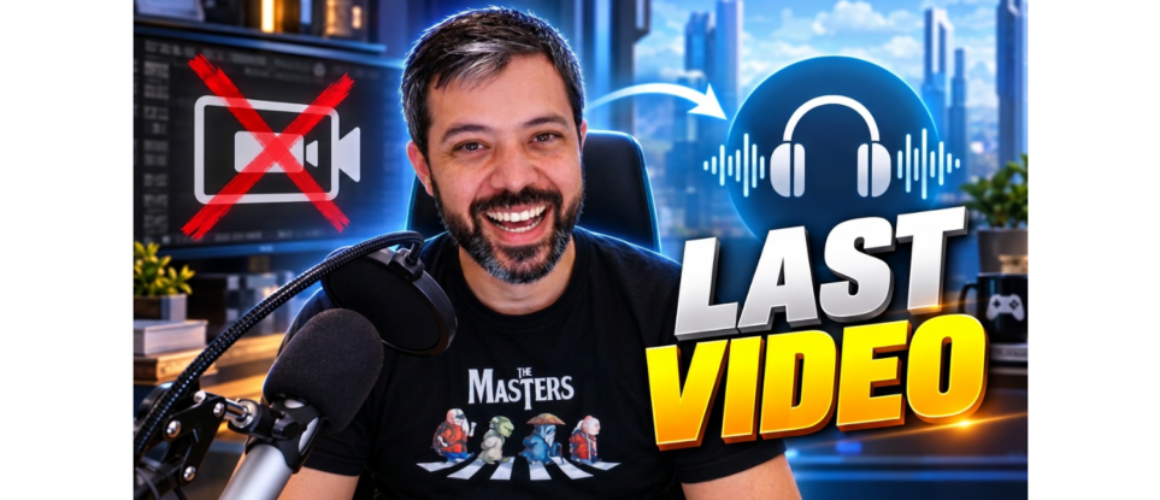

Nobody Decided to Keep It | Episode 466


 Get the free Core Drives in the Wild guide, behavioral design applied to real products: professorgame.com/WildCD
Episode Summary
Rob explains subtraction neglect, the tendency of teams to fix problems by adding features, programs and pilots while rarely considering what to remove, using his own decision to stop publishing Professor Game on video as the case study. He walks through the 2021 Nature study by Adams, Converse, Hales and Klotz, including a Lego experiment where people paid to add bricks and a university call for ideas where 89% of suggestions were additions. Listeners learn the questions that expose things nobody decided to keep, and how to present a removal to leadership as a trade-off with a number attached.About the Host
Rob Alvarez is Head of Engagement Strategy, Europe at The Octalysis Group (TOG), a leading gamification and behavioral design consultancy. A globally recognized gamification strategist and TEDx speaker, he founded and hosts Professor Game, the #1 gamification podcast, and has interviewed hundreds of global experts. He designs evidence-based engagement systems that drive motivation, loyalty, and results, and teaches LEGO® SERIOUS PLAY® and gamification at top institutions including IE Business School, EFMD, and EBS University across Europe, the Americas, and Asia.Key Takeaways
- In the 2021 Nature study by Adams, Converse, Hales and Klotz, people paid 10 cents per added Lego brick to stabilize a platform, yet only 41% found the better fix: removing a single block for free.
- When an incoming university president asked the community for ideas, 89% of the suggestions added something to the university and only 11% proposed removing anything.
- Shown an additive and a subtractive solution side by side, more than eight in ten people choose removal. Subtraction gets overlooked far more often than it gets rejected.
- Professor Game’s full video episodes began as a way to feed social clips. When the clipping stopped, the video ran for about two years with modest views, because nobody ever decided to keep it.
- Removal tends to come to mind only when something looks visibly bloated or odd, like a 15-ingredient soup. Things that look normal, such as video on a podcast, get a free pass.
- Present a removal as a trade-off with a number: what it would cost to make the thing work, how uncertain the return is, and where that money and effort will go instead.
Topics Covered
- 0:00 – The last video episode of Professor Game
- 0:26 – Why the show started audio-only
- 1:27 – How video crept in, one sensible step at a time
- 3:06 – The reason left, the video stayed
- 3:54 – Dashboards, pilots and features nobody decided to keep
- 4:59 – The Nature study on why we overlook removal
- 5:40 – Paying for Lego bricks instead of removing one
- 6:31 – Why removal never comes to mind
- 7:48 – Could I make video work? The wrong question
- 9:11 – How to report a removal without spin
- 10:55 – Questions to ask about any feature
- 12:00 – The first move of the relaunch
Mentioned in This Episode
- People systematically overlook subtractive changes (Adams, Converse, Hales and Klotz, Nature, 2021)
- Riverside
- The Octalysis Framework
- The Octalysis Group: Procter & Gamble sales gamification case study
Free Resources and Get in Touch
- Core Drives in the Wild: Professor Game Free Guide
- Get Daily Value on Your Email
- Let’s chat about your gamification project
- YouTube
- Start Your Community on Skool for Free
- Ask a question
The last video episode of Professor Game
Rob Alvarez (00:00): This is the last video episode of Professor Game. If you’re only listening in, I just put my hand over the camera, and the big news is now you’re not missing absolutely anything. And that is the center of this episode. It’s the big why, and of course it’s the case study we’ll be analyzing we’ll still be coming out every single Monday, audio everywhere, even on YouTube.Why the show started audio-only
Rob Alvarez (00:26): So out of this whole story with videos start with Professor Game, you might or might not know that we started entirely as an audio podcast. in fact, for still the majority of our story we’ve been audio only. for me it had many different reasons. One is I’ve always loved the audio format. I’ve also been praised more by how I talk than by how I look. Just kidding. But yeah, like people have indeed been usually very pleased by, you know, what they hear, tone of my voice, the way I express things. So I thought I also had a strong love for radio, the format itself. I even did a stint on radio a while back. But let’s go beyond that. So that’s the way the podcast started. That’s you know what positioned us, that’s what led us to be the number one in the space, the only one. That has been doing this for at that point six years, but now almost nine. As you know, we’re coming up in our anniversary.How video crept in, one sensible step at a time
Rob Alvarez (01:27): and suddenly, thinking of expanding, somebody somebody suggested. if you’re already doing these interviews and the hard part is bringing these people in, and you know, don’t have a a bad camera, you have a good camera. I I used it also for other things, webinars and for work and so on. You have a nice backing like the one. that you’ve seen and the previous one I had before. why why not do video? You know, you you you have the video, then you can do social clipping, right? And that way you can have better content for social media, more content, more promotion, more listeners. You know, seems like a vicious, virtuous circle. Reasonable, locally, sounded like a very good decision. Then Now you have the footage, right? So you’re recording on video, you already are paying for at that time. I don’t remember what software I started using. can’t remember. Right now I’m using Riverside. You already have it, you know, let’s say on Riverside, it’s easy, right? What about you literally grab those episodes? And when you’re editing the audio, just edit the audio as if you had no video and upload it to YouTube. Now you have an image. YouTube is gonna thank you for that. People are gonna be happy. You’re gonna have more views. Everybody wins. Again, reasonable. Eventually, of course, as things are, this is this podcast is is has been, I don’t know if it will be, but it is basically me. As you, as you might know, I do have a team helping me out with some things, but the the whole podcast itself is essentially me, and that sometimes includes promotion, social, clipping, all of that.The reason left, the video stayed
Rob Alvarez (03:06): And eventually I I realized it was taking way too much of my time. Social clipping and all that. I’m not a specialist of social media. So I was getting the results I could get from that. And the the thing of doing this clipping eventually was like, well, you know, my efforts are better invested somewhere else. But of course, if I’m already doing the video anyways, why stop publishing on video? So the reason why I started doing video actually disappeared. And the video, the thing itself, stayed. Nobody made a conscious decision to keep it. It was just, you know, the the I’m already doing it, anyways. So the question I’d ask anybody who was in sitting in a seat like yours, for example, isDashboards, pilots and features nobody decided to keep
Rob Alvarez (03:54): Whatever it is that you’re doing, whatever feature stuff that it ha has work, every now and then you want to ask yourself, what was this for? And is it actually achieving those objectives? About two years of two full episodes at this at this stage on on on YouTube, I can say openly, I’ve always been pretty open and transparent. Besides, you can also see it on the on the channel. It’s pretty modest views. Almost nobody is acting either on the stuff that I put on YouTube. any CTAs or anything. So I I I arrived to to this to this place where, let’s say you have this dashboard, for example, nobody opens since, the reorganization happened. It’s it’s that pilot that quietly became something permanent. you didn’t know it was going to be a permanent thing. You were trying it out, but nobody stopped the pilot, so it just took over. It’s it’s like having a feature where the sponsor pushed for the feature, then changed teams and nobody Had the decision to say, well, this feature, we tested it out and it doesn’t work, or it doesn’t work for what we want to do.The Nature study on why we overlook removal
Rob Alvarez (04:59): So I bring this up because it it is it is a thing for teams that and it’s it’s actually been pretty well researched as well. There’s a study by Adams, Converse, Hales, and Klotz in Nature 2021, relatively recent, where they did a bunch of experiments plus plus smaller studies where It’s so easy once you see it to think of improving something by removing something versus improving something by adding something. And although once you see it, you can’t unsee it for that specific case. The next time you do it, chances are you’ll again think of adding something rather than removing something.Paying for Lego bricks instead of removing one
Rob Alvarez (05:40): There’s there was this this Lego task that I saw also. they made the the idea was to make a platform, hold a brick. A brick above certain figurine, right? So you you had to pay w they they paid you one dollar for success and ten cents you had to pay per every added brick. And the best answer was removing one block. Rather than adding something, it was removing a block. Forty-one percent of the people removed it. Removing is free, Still, even though it was free, a lot of people chose to add a brick and pay for it rather than realize that removing was not only the right move, but it was also free. So there’s there there’s this incoming university president that has a community for ideas, this as university. Eighty nine percent of the ideas were adding something, only eleven percent were removing.Why removal never comes to mind
Rob Alvarez (06:31): When people see both options side by side, more than eight in ten pick removal. When you see addition versus removal, once you see it, people don’t reject the idea. We don’t reject the idea of removal. We just don’t tend to think about it. So busy minds, of course, remove less, People in your quarterly review are the busiest people in the building. When removal comes to mind, something looks visibly bloated or odd it’s a it’s a fifteen ingredient soup it’s it it’s it’s when it’s very very bloated it’s when it’s just too obvious nowadays since video is normal everybody’s doing video normal gets a free pass when adoption for your product stalls what do you think your your team proposes first a reminder an incentive a new feature A leaderboard, something to add, right? That is the typical answer to a problem. What do we have to do now to achieve that new result? By the way, as you know, we have our Core Drives in the Wild guide that you can find on the link in the description on professorgame.com/WildCD. But click on the link below, it’s a lot easier to make it there.Could I make video work? The wrong question
Rob Alvarez (07:48): So, to the question, of course, you’ll now be asking Rob, but are you saying video is bad? Are you saying you you wouldn’t be able to make video work? What do you mean? And the the answer is is is is probably. I think I I’m I think I can make it work. of course that would mean putting in serious investment, serious time, and obviously no guarantee at all. And honestly I think that’s asking the wrong question. The right question is is this the best place to put the next Dollar, the next pound of sweat, the next hour of effort. The real cost of keeping something is not just what it’s costing you to do it, it’s also what it’s crowding out in other terms. Just like with motivation, extrinsic motivation can crowd out intrinsic motivation if you don’t do it right. In the case of effort, this is even more obvious. You’re pushing something in that means that there’s other things that you are not doing. Where is my free effort gonna go? Not 100% sure yet, but things like better guests, well, better guests, I’ve had fantastic guests. I can’t complain on my guests at all. Sharper episodes. there there’s many places where this could be going, even part of my consulting work to become sharper myself for more learning and actually being able to do better at many other things.How to report a removal without spin
Rob Alvarez (09:11): So, how do you report this removal? Right? How do you do you you come up to your boss and you say, Look. the best thing we can do for our app now is to remove this thing, right? rather than saying, we did this to we’re removing the video experience to become audio first to better serve you. I honestly don’t think that’s authentic. I I don’t see myself saying that, even though I just did in a mocking tone tone. I I’m gonna say it as it is. It just didn’t earn its keep, At least not at the the level of effort I am able to put into it. actually I I’d rather start putting that effort into Other things like the relaunch right now, honestly. And that’s that’s one of the reasons why the change is happening now. We’re already relaunching the podcast. Things are changing. So it’s it’s a good it’s a good moment to do some things that are differently. and and when it comes up quarterly review or your bosses or you have to do a presentation, the the answer I I and and you can also, you know, you can also sell it as a trade off. Usually it’s it’s even easier in company cases. You say, Well, we can make it work. This is how much it would cost. The return, we’re not very sure because we didn’t make it work yet. And you know, at least unless you really want to put in that money and see what happens, we are putting that into this other thing where which we do believe will bring much better results. Right. So you’re dropping something because you’re dedicating those efforts to this other thing. The decision is always something that needs needs a number attached. You know, nobody nobody is gonna tell you, you know, you just made that out. You’re you’re confessing a failure or anything, which By the way it’s not bad. but it’s not about what what or how you’re confessing it, it’s it’s about justifying that decision the right way.Questions to ask about any feature
Rob Alvarez (10:55): So when you’re gonna start looking at your product, there are things you might want to ask yourself, what what this was built for, right? You see that feature. What was this built for? Does it does it make people do the thing? Is it happening? Then things like is the reason why this began still around? Are you is it still happening? So I created video to create social clips. I’m not even doing the social clip clips right now. I might retake it again. I might continue to record in video, I don’t know. we’ll see about that. but the reason why it was created was that one it’s not even around. And then would the effort go to something better instead? if I stop doing this, can I do this other thing which is potentially better or at least new? I mean we know this is not working as well as we expected. Is this new thing maybe gonna work better? the estimation is looking a lot better. So put that, what can we remove on the agenda? Put that as a standing question. Don’t don’t just wait until the right time comes to see what you remove. Put it as an as an agenda item. Actually, schedule for what are we going to remove?The first move of the relaunch
Rob Alvarez (12:00): Right? So this is the first move of something that is going to come. The first thing that we’re doing. And I’m setting that example of what I’m what I’m proposing is taking something away. No more video podcast episodes for Professor Game. In November, we’re turning nine. Things are happening. This is the first one that actually gets something to happen. So again, if understanding the Core Drives, their implications, and how they work in the corporate world, with of course my perspective, my professional perspective as a consultant in Octalysis is something that you find would be useful so that you can understand this and perform it better in your own work and your own product. All you have to do is click on the link in the description. You’ll click there, you put your email in, and you’ll get your guide straight to your email immediately. It’s one email a day for a few days, one per Core Drive. You’ll see cases, situations that are analyzed directly through past episodes of the podcast, by the way, many of them audio only. And you’ll get that guide right in so you start on the right path to understanding how motivation works in your own settings. And at least for now and for today. It is time to say that it’s game over. End of transcriptionDiscover more from Professor Game
Subscribe to get the latest posts sent to your email.