Episode Summary
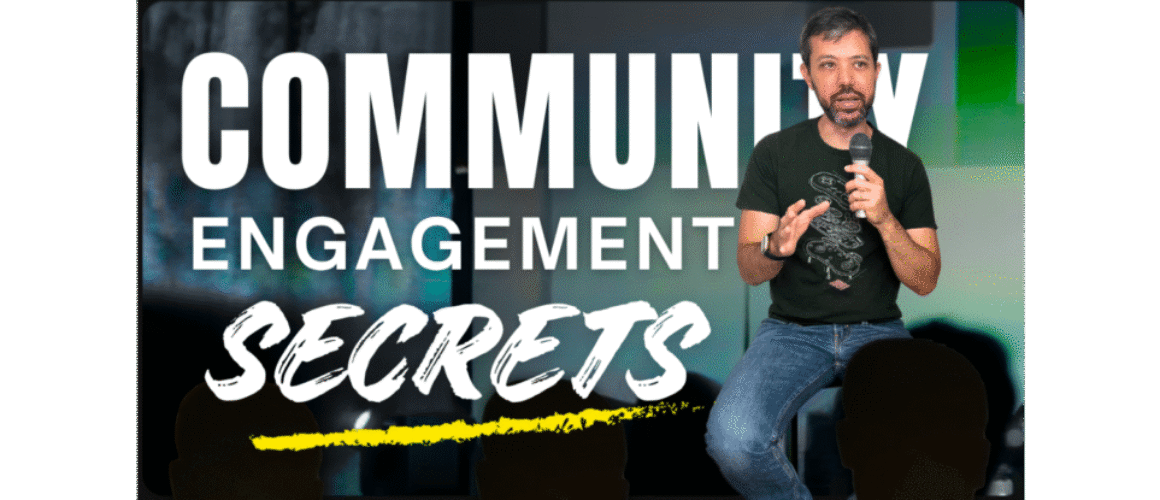
Rob Alvarez argues that community founders burn out because they build feedback loops for members but not for themselves, and because they build communities they don’t personally want to inhabit. He recommends a personal momentum tracker (points for posts, member wins, helpful replies) and uses Daniel Vassallo’s Small Bets and his own eight-year podcast run as evidence that founder-as-first-member is what makes communities sustainably sticky.
About the Host
Rob Alvarez is Head of Engagement Strategy, Europe at The Octalysis Group (TOG), a leading gamification and behavioral design consultancy. A globally recognized gamification strategist and TEDx speaker, he founded and hosts Professor Game, the #1 gamification podcast, and has interviewed hundreds of global experts. He designs evidence-based engagement systems that drive motivation, loyalty, and results, and teaches LEGO® SERIOUS PLAY® and gamification at top institutions including IE Business School, EFMD, and EBS University across Europe, the Americas, and Asia.
Key Takeaways
- Communities die in silence because, unlike social media or games, they lack the feedback loop that keeps founders showing up.
- Founders should gamify their own contribution with a simple weekly point tracker (e.g., 10 points across posts, member wins, and helpful replies) and tie it to a small personal reward.
- The most durable communities are ones the founder would still want to participate in if they weren’t running them. Daniel Vassallo’s Small Bets is cited as a working example.
- Rob attributes his eight-year weekly podcast streak to optimizing for conversations he wanted to have, not for audience growth.
- Creators consistently design reward systems for members while neglecting equivalent systems for themselves, which is what produces founder burnout.
Free Resources and Get in Touch
Rob
Looking forward to reading or hearing from you,
Rob
Full episode transcription (AI Generated)
Rob Alvarez (00:01)
Have you ever launched a community, maybe on school or somewhere else, and felt like you did everything right, but then nothing happened? No replies, no engagement, just silence. Most creators struggle with dead or passive communities. I’ve helped double retention and rebuild engagement from the inside out. And on this video, I’ll show you how the most engaging communities actually work and how to build one
without burning out. Two simple, powerful strategies. The second one actually changed everything for me. So let’s start with the first one. Have you ever wondered why social media or games, for that matter, are so addictive? And no, it’s not the visual design. Every swipe, like or ping gives you a hit of dopamine and your brain craves more.
It’s the feedback loop and that feedback loop is the key. But when you’re running a community, that feedback just disappears. You show up and nothing really happens. It’s like playing a game with no score, no reaction, no win condition. Now here’s the twist. Even top creators, people like Abhi Abdaal, still track their habits and dashboards. Not because they need to, but because progress
feels good. They have built personal systems where showing up feels like winning. And when showing up feels good, you keep going. That’s the shift. Gamify your own progress. The simple version of this is to create a simple, basic momentum tracker. Give yourself a point. As simple as that. For things like a valuable post. One for a member win.
one for helpful reply and set a weekly goal. Let’s say 10 points. Then reward yourself, whether it’s a coffee, break, a level up message that only you are going to read. That way you’re not just building the community, you’re playing your own role in it with purpose. We create reward systems for our members, but then we forget to build them for ourselves. What would it look like?
if you could see progress every week.
keep that in mind. And now let’s shift gears and talk about the second recommendation, because I also started noticing a pattern in communities that actually lasted. They weren’t the loudest. They didn’t post the most, but their members showed up. And so did the founders. That got me thinking, why do they keep showing up? What makes it feel easy for them year after year after year?
and what makes so many others, good ones even, slowly but surely fall apart. And it’s not just better systems and it’s not just more team.
Then I remember something from my own story. When I started my podcast almost eight years ago, I honestly didn’t even expect anyone to listen. It wasn’t even my goal. I just wanted to have the kinds of conversations I would want to hear even when no one else was listening. And that’s how I’ve been able to sustain a weekly podcast publishing one episode every single week for almost eight years now.
I wasn’t trying to optimize. I was trying to enjoy the process. And that’s when it clicked. They didn’t just build communities for other people out there. They built communities they actually wanted to be a part of. That changes everything.
It’s not just me. It’s not just me telling you this. Creators like Daniel Vassallo built their communities around their own curiosity. He started Small Bats because he wanted a space to talk with people like him, not to fill a funnel. And that’s why it works. That’s why it’s growing. That’s why it’s sticky. Let that sink in for a second. Because here’s the truth.
If your community is starting to feel like work, you need to take a step back, man. Ask yourself, would I show up to the space if I wasn’t the one running it? More importantly, what would make you want to show up for the space? What would make you excited to log in tomorrow?
I’m reading you the comments. If you want help designing a community, you can’t wait to lead. I’m offering free clarity calls right now. No sales, no pitch, just strategy and support. Find the instructions below.
Thanks for watching and if you’re building something that matters, make sure you keep going because the best communities don’t hustle their way to engagement. They design it.
End of transcription
Related
Discover more from Professor Game
Subscribe to get the latest posts sent to your email.